





Where does the risk lie?

Jorge Silveira Botelho | BBVA Asset Managment
Head of the BBVA Asset Management business unit in Portugal
With more than 33 years' experience in asset management and capital markets, Jorge Silveira Botelho is responsible for promoting and managing the BBVA Group's asset management business in Portugal.
Where does the risk lie?
November 2026 by Jorge Silveira Botelho
Many of the financial risks that were present in the last major financial crisis are not significant today, but many savers continue to consider them as if they still were. Conversely, other risks that were less relevant at the time are now gaining more traction, while new risks are emerging.
The first consideration should be how the risks in the public and private sectors have evolved, particularly those related to household, corporate, and government debt and the solvency of the financial system.
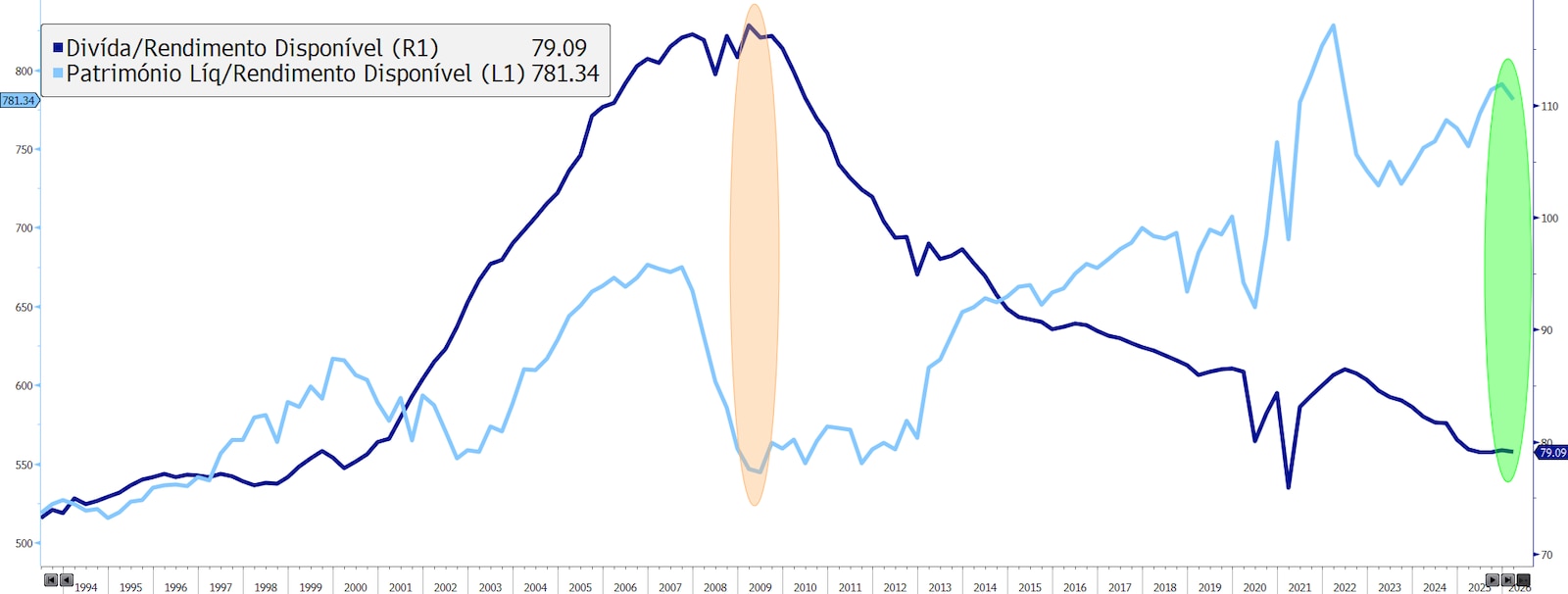
When we look at household debt, we see that deleveraging has been significant over the course of the last decade across all regions of the globe, while at the same time, the appreciation of real estate and financial assets has had a significant impact on household net worth. In practice, we find ourselves in a situation which is symmetrical to the one which occurred during the 2008 crisis, when indebtedness was very high and the value of assets collapsed. On the other hand, it should also be noted that global employment levels are historically high, which attests to the remarkable resilience of consumers.
USA: Evolution of household debt versus assets, 1994-2026
Source: BBVA AM Portugal, Bloomberg
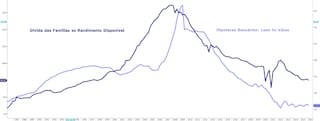
When we analyze corporate debt, we also find that it is quite stable. But what really stands out is the degree of solvency of the financial system. All the regulatory changes that occurred after the 2008 crisis, the significant deleveraging of bank balance sheets, and the excess capital created in the system are realities that contrast with the great financial crisis. On the other hand, the reduction in private-sector debt among households and businesses, accompanied by the appreciation of the assets that secure loans, restores unparalleled resilience to the system.
USA: Mortgages vs. market value of homes and household debt, 1987-2026
Source: BBVA AM Portugal, Bloomberg
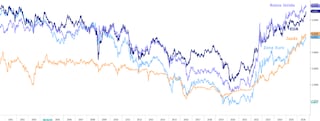
Nowadays, governments are taking on excessive debt, where in some countries the dynamics of debt and deficit growth are hardly sustainable. However, it should be noted that after the 2008 crisis, the role of Central Banks changed structurally, with the adoption of new mechanisms and instruments for conducting monetary policy, which function as automatic stabilizers. However, it should also be noted that the prospect of public debt growth is an unavoidable reality in light of the substantial investments underlying the autonomy of different regions of the globe, where projected investments in the energy transition, electrification, defense, infrastructure, new technologies, and data centers are placing increasing pressure on the risk premium on long-term debt.
Evolution of 30-year interest rates: USA, Eurozone, UK and Japan
Source: BBVA AM Portugal, Bloomberg
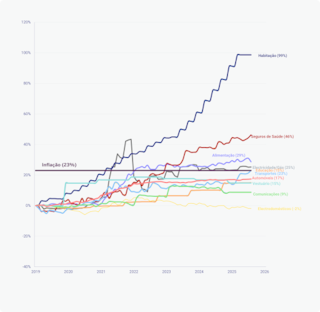
The second consideration should be the risk of inflation, insofar as this risk is now different from that which was present in the decade following the great financial crisis. During the decade preceding the pandemic, average inflation was 1.17%; however, since the pandemic, average inflation has been around 3.15%. While it is true that the pandemic and wars have had an impact on inflation in this decade, it is equally true that changes in consumption patterns and consumer choices are generating more heterogeneous inflation dynamics, with different sub-items exhibiting more volatile behavior. There has been significant disinflation in some goods but, conversely, an acceleration in others and in services. Inflation affects social classes and generations differently, as the weight of essential goods such as food, housing, energy, and healthcare affects consumers differently depending on their socioeconomic circumstances and age.
The Portuguese inflation index and some sub-items since 2019
Source: BBVA AM Portugal, Bloomberg
On the other hand, it is becoming evident that an aging population, coupled with scientific advances in healthcare and biotechnology, means that healthcare is becoming increasingly important in consumer preferences. Governments do not have the capacity to finance this additional expenditure, and it is clear that this cost will largely fall on consumers. Therefore, longevity risk takes on significant importance, as it will require a different management of the timing of consumption, with important implications for consumers' consumption and savings decisions. Finally, a new risk relates to the emergence of Artificial Intelligence (AI), which may have significant impacts on society, some of which are still very difficult to interpret properly. However, while we measure and assess the risks and benefits of applying AI, there is an obvious risk that needs to be addressed: the increasingly frequent risk of cyberattacks. In short, one of the biggest vulnerabilities we face when mitigating risks and protecting our assets is falling into the temptation of thinking that risks are always the same and, consequently, applying the same solutions as we did before. Unfortunately, this is not always the case. Previous circumstances were different, and using the same approach may now have perverse effects:
- Should we be as concerned about banks today as we were in 2008?
- Will inflation be more persistent?
- Will a post-tax deposit really protect our purchasing power?
- Will longevity force us to save earlier and for longer?
- Are we adequately protected against technological risk?
These are some of the questions and considerations we should raise in order to correctly interpret the risks we are actually facing.