





The long-distance race in search of retirement income
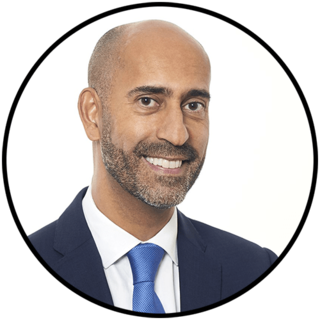
Mário Pires | Schroders
In this position, Mário Pires is responsible for meeting the interests and needs of intermediary and institutional clients in Portugal, as well as growing the business in the region.
The long-distance race in search of retirement income
November 2026 by Mário Pires
Retirement has a very important component that is often ignored, but which, with the population expected to live longer, is taking on growing importance. This is de-accumulation.
In short, de-accumulation is a matter of mindset. Investors spend their entire lives growing their assets until they reach retirement. De-accumulation is essentially an investment strategy or a financial planning approach that consists of changing that mindset: Instead of growing wealth, the focus shifts to spending and maintaining it during retirement.
The de-accumulation phase often receives less attention because it is seen as a distant concern. However, it constitutes one of the most decisive stages in the financial life of any investor. Addressing this issue early allows us to understand the accumulation and use of assets as parts of the same process, instead of independent steps. Furthermore, engaging in conversations around this topic at an early stage proves especially valuable, since personal circumstances, financial goals, and risk tolerance evolve significantly before retirement. Incorporating de-accumulation plans from the early stages of the investment cycle offers greater scope to assess key aspects, such as the balance between flexibility and certainty, the growth of capital and stability of income, or liquidity and protection against longevity risk. Ultimately, advance planning fosters more considered decisions and reduces the risk of adopting hasty solutions when the time comes to convert savings into income.
As such, we need to distinguish between a financial plan and an investment plan. The components of a financial plan must be present and answer fundamental questions: How long do you think you'll live? Do you want to leave part of your assets to a charity or to family members?
Financial advisors should also assess people's willingness and ability to take on these risks, which may be investment risks, but also risks associated with the duration of retirement itself. In this context, longevity risk is currently more important than it was previously. As life expectancy increases, investors may have to finance increasingly longer retirement periods, making it more relevant to consider the possibility that accumulated wealth may not be sufficient to cover all needs. Thus, although investment risk remains important, longevity risk should now occupy a more central place in de-accumulation planning, along with risks such as inflation and sequence-of-returns risk. The goal is to ensure that assets and available income are sufficient at the start of retirement to meet a time horizon that may be much longer than initially anticipated.
The order in which returns occur does, in fact, affect the outcome
The order in which returns occur is important when retirement comes around. This often surprises people because, as you grow your wealth, the order in which losses or gains occur doesn't matter. But when you start withdrawing money from your retirement savings, if you suffer larger losses early in your retirement, you expose yourself to sequence-of-returns risk, which needs to be managed. This is the key difference between accumulation and drawdown or de-accumulation.
What options do investors have to navigate this vital phase? If they are looking for absolute certainty, they might consider an annuity, which involves an agreement where the individual invests hard-earned money and hands it over to a third party, usually an insurance company, which in return guarantees an income until the date of their death.
But it is also possible to opt for a well-established financial planning approach, such as the method of dividing funds into three compartments. This involves holding cash during the first few years, perhaps in bonds for the subsequent medium-term period, and holding growth assets for the long term. This gives you the peace of mind of not having to change strategies when asset value decreases due to market fluctuations.
In short, financial planning for retirement doesn't end when you stop saving: It is actually the start of a new phase in which the essential goal becomes transforming accumulated assets into a sustainable and efficient source of income. Therefore, devoting the same attention to de-accumulation that was given to accumulation is no longer just advisable, but essential to achieving true long-term financial peace of mind.